
Can Black Skin Get Sunburn? The Truth About Melanin and Sun Protection
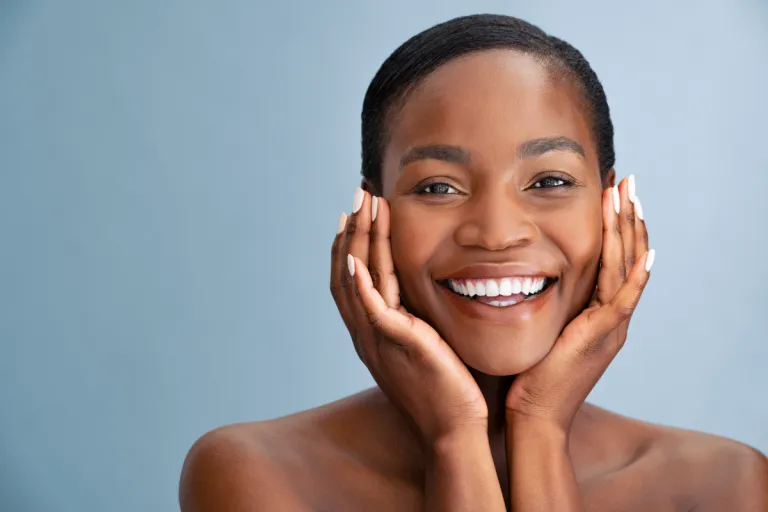
Yes, Black skin can get sunburned. More melanin offers some protection, but it does not make skin immune to UV damage, pigment changes, or skin cancer. Skin cancer is less common in people with darker skin, yet it can occur and may be diagnosed later. Sun protection and attention to new or changing lesions matter at every skin tone.
What Melanin Actually Does — and What It Does Not Do
Melanin is the pigment produced by melanocytes in the skin. It absorbs and scatters ultraviolet (UV) radiation, which provides a degree of natural photoprotection. The more melanin your skin produces, the more UV absorption you get. This is why darker skin tones burn less frequently than lighter skin tones — the melanin is doing real work as a UV filter.
But the protection melanin provides is partial, not complete. Research estimates that the natural SPF equivalent of very dark skin (Fitzpatrick type VI) is roughly SPF 13 — which is meaningful but well below the SPF 30 minimum that dermatologists recommend for adequate sun protection. For comparison, lighter brown skin (Fitzpatrick type IV) has an estimated natural SPF of about 4 to 8. None of these provide sufficient protection against cumulative UV damage.
Melanin is also more effective at blocking UVB rays (the wavelength primarily responsible for sunburn) than UVA rays (the wavelength primarily responsible for premature aging, collagen degradation, and deeper skin damage). This means that darker skin tones may rarely burn while still accumulating significant UVA damage over time — damage that manifests as hyperpigmentation, uneven tone, and premature aging rather than as a visible sunburn.
The bottom line on melanin: it provides real but incomplete protection, it is more effective against burning rays than aging rays, and it does not protect against the full spectrum of UV damage that affects skin health long-term.
What Sunburn Looks Like on Darker Skin
One of the reasons the “black skin doesn’t burn” myth persists is that sunburn on darker skin often does not look like the stereotypical red, peeling burn that people associate with sun damage. On lighter skin, sunburn presents as obvious redness (erythema) because the blood vessels dilating beneath the skin are easily visible. On darker skin, that same vascular response is harder to see through the higher melanin concentration.
On darker skin tones, sunburn may present as skin that feels hot, tight, or tender to the touch without obvious redness. The affected area may appear darker or more purple-toned rather than red. There may be a feeling of warmth and discomfort that is dismissed as heat-related rather than recognized as a burn. Peeling may occur without the preceding redness that lighter-skinned patients use as a warning sign.
Because sunburn is harder to detect visually on darker skin, it often goes unrecognized — which means it goes untreated, and the cumulative damage goes unaddressed. A patient who does not realize they are being burned is a patient who is not adjusting their behavior to prevent it from happening again.
Sun Damage Beyond Sunburn
Sunburn gets the attention, but it is not the most consequential form of sun damage for darker skin tones. The risks that have a greater long-term impact are the ones that accumulate silently.
Hyperpigmentation. This is the most common visible consequence of sun damage on darker skin. UV exposure stimulates melanocyte activity, and in skin that already produces melanin abundantly, this stimulation can cause uneven melanin distribution — resulting in dark spots, patches, and overall uneven tone. Hyperpigmentation is one of the top skin concerns among patients with darker skin tones, and UV exposure is one of its primary drivers. Every instance of unprotected sun exposure is an opportunity for melanocytes to overproduce, and that cumulative overproduction becomes increasingly difficult to reverse.
Melasma. Melasma — the chronic pigmentation condition that causes brown or grayish-brown patches on the face — is triggered by the combination of hormonal factors and UV exposure. It disproportionately affects patients with Fitzpatrick types III through VI. Even minimal UV exposure can reactivate or worsen melasma in susceptible individuals. For patients managing melasma, sun protection is not a recommendation — it is the single most important component of their treatment plan.
Photoaging. UV radiation breaks down collagen and elastin in the dermis — the structural proteins responsible for skin firmness and elasticity. While darker skin tones show signs of photoaging later in life than lighter skin tones (partially due to melanin’s protective effect), the damage still accumulates. Fine lines, textural changes, and loss of elasticity from sun damage affect all skin tones — darker skin just tends to show it later, which can create a false sense of immunity.
Skin cancer. Darker skin is not immune. The American Academy of Dermatology explains how to recognize skin cancer in darker skin tones, including concerning changes on the palms, soles, and beneath nails. Seek assessment for a new, changing, bleeding, or nonhealing spot. Discuss any routine examination schedule with a clinician based on your own risk.
Why the Myth Persists
The belief that dark skin does not need sun protection comes from several places, and understanding them helps explain why it is so persistent.
First, the visible evidence of sun damage is less obvious on darker skin. Sunburn does not look the same, photoaging appears later, and the cumulative damage is harder to see with the naked eye. If you cannot see the damage, it is easy to conclude that no damage is occurring.
Second, the dermatology and skincare industries have historically centered their research, education, and marketing around lighter skin tones. Sun protection messaging has overwhelmingly featured fair-skinned models, and the visual examples of sun damage used in medical training skew heavily toward lighter skin. When darker-skinned patients do not see themselves represented in sun protection messaging, the implicit message is that it does not apply to them.
Third, the SPF in melanin is real. It provides measurable protection. The issue is not that melanin does nothing — it is that the protection is partial, and partial protection is not the same as sufficient protection. Telling someone with dark skin that melanin “protects” them without quantifying how much (roughly SPF 8 to 13) creates a misleading sense of security.
Sun Protection for Darker Skin Tones
The fundamentals of sun protection are the same regardless of skin tone, but there are specific considerations that matter for darker-skinned patients — particularly around product selection, since the wrong sunscreen can create its own cosmetic issues.
Wear broad-spectrum SPF 30 or higher daily. Broad-spectrum means the sunscreen protects against both UVA and UVB rays. UVB causes burning; UVA causes hyperpigmentation, collagen breakdown, and deeper tissue damage. Melanin provides more protection against UVB than UVA, which means daily UVA protection is especially important for darker skin tones. SPF 30 blocks approximately 97 percent of UVB rays; SPF 50 blocks approximately 98 percent. The difference between 30 and 50 is minimal — consistent daily application matters more than a higher number applied inconsistently.
Choose a sunscreen that works with your skin tone. This is where many darker-skinned patients have historically given up on sunscreen — because most mineral (zinc oxide) sunscreens leave a visible white or chalky residue on darker skin. This has improved significantly in recent years with tinted mineral formulations and micronized zinc oxide that absorbs more transparently. Revision Skincare Intellishade is a tinted broad-spectrum SPF 50 that blends into a wide range of skin tones without leaving a white cast — it is one of the products we recommend most frequently for this reason. SkinBetter Science also offers sunscreen formulations that work well across skin tones.
Follow sunscreen reapplication directions. Reapply at least every two hours while outdoors and after swimming or sweating, following the product label. Do not assume that one morning application protects through all later outdoor exposure.
Do not skip sunscreen on overcast days. Up to 80 percent of UV radiation penetrates cloud cover. Overcast days still cause UV damage and still trigger melanocyte activity in pigmentation-prone skin. If hyperpigmentation or melasma is a concern, daily sunscreen regardless of weather is essential.
Use physical barriers when possible. Wide-brimmed hats, UV-protective sunglasses, and UPF-rated clothing provide reliable, reapplication-free protection. For patients who dislike the feel of sunscreen on their skin or who have difficulty finding a product that works with their skin tone, physical barriers are an effective complement or alternative for body coverage.
Treating Existing Sun Damage on Darker Skin
If you already have sun damage — hyperpigmentation, dark spots, uneven tone, melasma — treatment is available, but the approach must be tailored to melanin-rich skin. Many treatments that work well on lighter skin carry higher risks on darker skin tones, particularly the risk of post-inflammatory hyperpigmentation from the treatment itself.
Chemical peels — specifically the VI Peel, which is formulated for safety across all Fitzpatrick types — can effectively treat hyperpigmentation by accelerating the turnover of pigmented cells and suppressing new melanin production. The VI Peel Precision and Precision Plus formulations are specifically designed for pigmentation concerns. For darker skin, peel selection, depth, and pre- and post-treatment melanin suppression protocols are critical. Not all chemical peels are appropriate for darker skin tones — the formulation matters.
Microneedling stimulates collagen production and can be combined with brightening serums to address hyperpigmentation at the dermal level. Because microneedling works through micro-injuries rather than chemical exfoliation, the risk profile is different — but melanin-reactive skin still requires careful technique and appropriate post-treatment care.
HydraFacial provides gentle exfoliation, extraction, and serum infusion without the inflammatory stimulus that can trigger PIH in reactive skin. For maintenance and mild pigmentation, HydraFacials are a lower-risk option that still delivers visible improvement.
Medical-grade skincare containing ingredients like niacinamide, azelaic acid, vitamin C, retinoids, and tyrosinase inhibitors provides daily melanin suppression and supports the results of in-office treatments. A consistent at-home regimen is not optional — it is what maintains results between treatments and prevents recurrence. Products from Revision Skincare and SkinBetter Science are formulated at concentrations that over-the-counter products do not match.
The most important treatment for sun damage on any skin tone is prevention — and that means daily sun protection going forward. No amount of in-office treatment will produce lasting results if the skin continues to receive unprotected UV exposure that reactivates melanocyte overproduction.
Sun Protection and Skincare for Darker Skin at ELLEMES
At ELLEMES Medical Spa, our providers — Lauren Siso, Jaycee Zotti, and Christian Carter — have extensive experience treating patients across all skin tones, including Fitzpatrick types IV through VI. Treatment plans for hyperpigmentation, melasma, and sun damage are adapted to account for melanin reactivity, and product recommendations are selected for compatibility with darker skin tones.
If you are dealing with hyperpigmentation, melasma, or uneven tone from sun damage and want a treatment plan built for your skin, a consultation is the best place to start. Your provider will assess your skin, identify the type of pigmentation you are dealing with, and recommend the approach that will produce the best results for your specific skin tone and concerns.
Learn more about hyperpigmentation treatment at ELLEMES →
Learn more about sun damage treatment at ELLEMES →
ELLEMES Medical Spa is located at 5505 Peachtree Dunwoody Road in Sandy Springs, GA — serving patients from Buckhead, Brookhaven, Dunwoody, and greater Atlanta.