



Pulsed light for selected sun spots, visible vessels, and persistent redness, with filters, sessions, and recovery individualized after skin assessment.

Even Tone, Less Redness
Why You'll Love It
Broad-spectrum light absorbed by pigment and vessels to clear spots and settle redness.

Pigment Correction
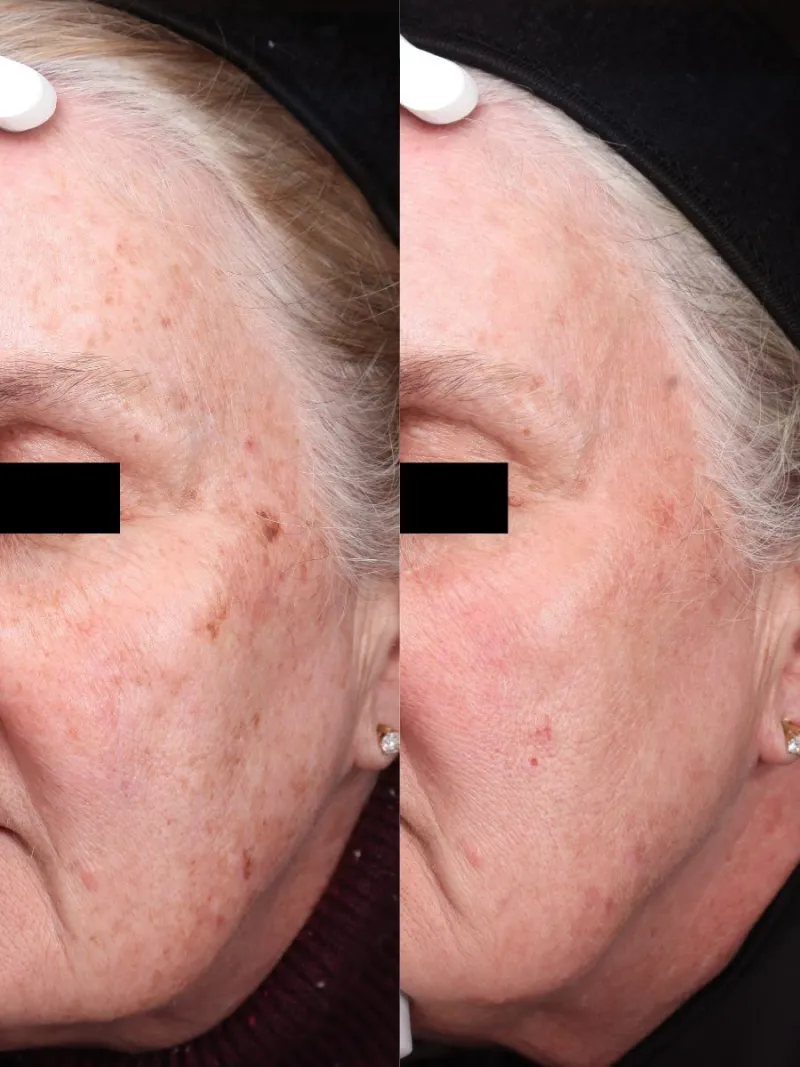
Light energy absorbed by selected pigmented spots can cause temporary darkening followed by shedding. Improvement depends on the type and depth of pigmentation.

Collagen Stimulation
The controlled heat from each pulse stimulates new collagen production in the dermal layer. Over a series of sessions, this improves skin texture, fine lines, and overall firmness.

Redness & Rosacea
IPL can reduce selected visible vessels and persistent redness. It does not cure rosacea, and burns or pigment changes are possible.
Targets Pigment and Vessels
Selected wavelengths are absorbed by pigment and blood vessels; surrounding skin still needs protection.
Skin Concerns We Treat
If your concern is on this list, IPL is likely a strong fit. If it’s not, your provider will tell you and recommend the right alternative.
Sun Damage & Age Spots
Sun exposure can contribute to brown spots and solar lentigines. Selected spots may darken and shed after IPL. For other pigmentation, your provider may discuss a chemical peel as a separate option, with timing based on skin tolerance and healing.
Rosacea & Facial Redness
IPL can reduce selected dilated vessels and persistent redness. Rosacea treatment may also involve medicines and trigger management, and response varies. Learn more about our rosacea treatment options in Atlanta.
Hyperpigmentation & Melasma
Melasma needs careful diagnosis and a broader management plan. Light treatment can worsen it even with careful settings, so IPL is not automatically the best choice. See our hyperpigmentation treatment page and melasma treatment page for more detail.
Broken Capillaries & Vessels
Visible spider veins and broken capillaries on the nose, cheeks, and chin respond well to IPL. The light energy is selectively absorbed by hemoglobin in these small vessels, causing them to coagulate and gradually fade over the following weeks. Our skin redness treatment page covers all available options.
Uneven Skin Tone & Texture
Cumulative sun exposure and aging create a mottled, uneven complexion. IPL addresses both pigment irregularities and low-level redness across the full face, producing a more uniform tone. For texture improvement, combining IPL with MOXI laser resurfacing may address a separate texture concern, if your provider considers the combination and timing appropriate.
Active Acne & Post-Acne Marks
IPL can reduce active inflammatory acne by targeting the bacteria (P. acnes) that contribute to breakouts. It also fades red and brown post-acne marks (post-inflammatory erythema and hyperpigmentation). For deeper acne scarring, RF microneedling or standard microneedling may be more appropriate.
Sciton BBL vs. Other IPL Systems
BBL is Sciton’s form of intense pulsed light and is the platform used for our IPL Photofacial. This is one treatment offering, not two different appointments. Other IPL systems vary in features and settings.
What to Expect: Before, During & After
A standard IPL Photofacial at ELLEMES takes 20–30 minutes per area. Most patients return to normal activities the same day.
Consultation & Skin Assessment
Your provider evaluates your skin type, pigmentation depth, and vascular concerns. They select the appropriate BBL filters and energy settings, then explain what to expect during and after treatment. A treatment plan is outlined before proceeding.
Preparation
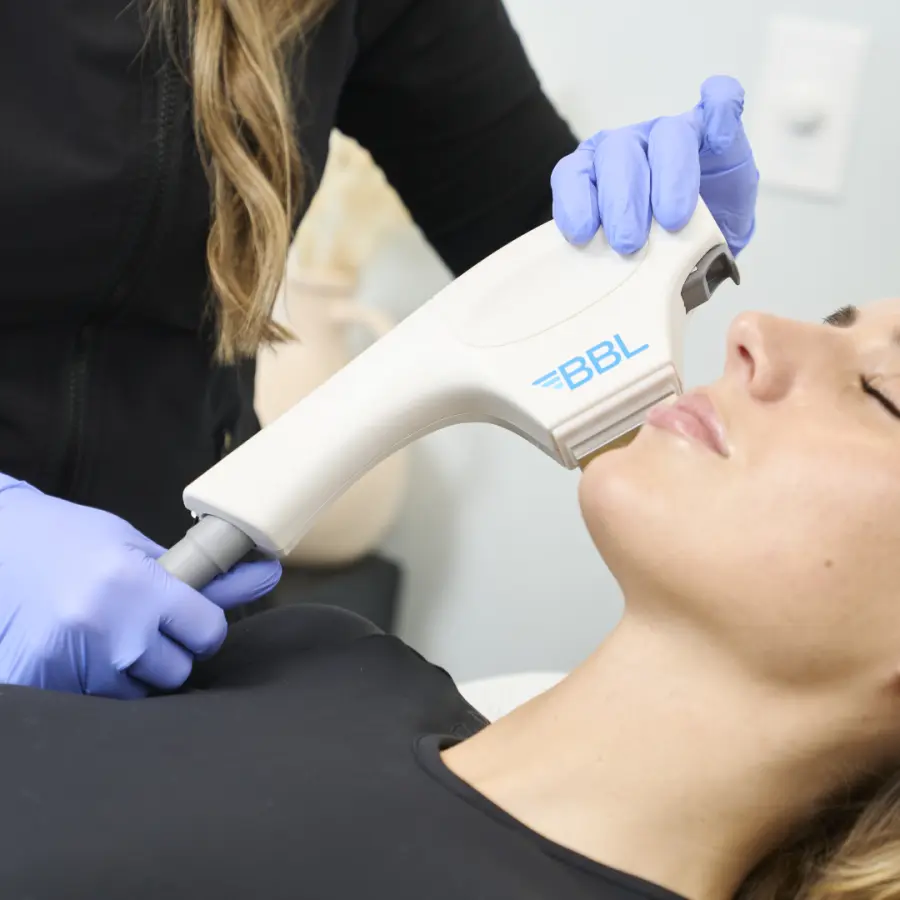
The treatment area is cleansed and a cooling gel is applied to improve light transmission and protect the skin surface. Protective eyewear is placed over your eyes before the handpiece makes contact.
Light Delivery
The BBL handpiece delivers controlled pulses of light across the treatment area. Most patients describe the sensation as a brief warm snap. The integrated cooling system keeps the skin surface comfortable between pulses. The face takes approximately 20 minutes; face and neck approximately 30 minutes.
Post-Treatment Response
Temporary redness, warmth and darkening of treated spots can occur. Darkening alone does not prove a successful result. Contact the clinic for blistering, worsening pain or an unexpected reaction.
Shedding & Results
Darkened spots may shed over the following one to two weeks. Improvement may build over a series, but complete clearing and a fixed result date cannot be promised. Do not pick or scrub the spots — let them shed on their own.
Post-Treatment Tips
Apply SPF 30+ sunscreen daily. Avoid direct sun, tanning beds, and self-tanners for 2 weeks. Do not pick or exfoliate darkened spots — let them shed naturally. Use gentle, fragrance-free products for the first 48 hours. Skip hot showers, saunas, and intense exercise for 24 hours. Resume retinol or active serums only after provider clearance. Full guidance on our post-care instructions page.
IPL Photofacial Options
Single-session pricing by treatment area. Multi-session packages available for series treatments — ask about Forever Young BBL maintenance.
IPL Face
Full-face IPL Photofacial — addresses sun damage, age spots, and pigmentation across the forehead, cheeks, nose, and chin in a single session.
- 20–30 minute treatment time
- Cheeks, forehead, nose, chin
- Pigment + vascular filters as needed
- Sciton BBL platform
IPL Face & Neck
Extends IPL treatment to the neck, where sun damage and discoloration often go untreated. Covers both areas in one appointment for consistent results.
- 30 minute treatment time
- Full face + neck
- Best for visible neck sun damage
- Series tailored to response
Face, Neck & Chest
Covers all three areas most exposed to cumulative sun damage. Treats pigmentation, redness, and age spots across the face, neck, and décolleté.
- 30–45 minute treatment time
- Face + neck + décolleté
- Ideal for chest sun damage
- Most comprehensive single visit
Multi-session packages
- ✓ Package of 3 — save 10% on a corrective series
- ✓ Package of 5 — save 15% for deeper treatment plans or annual Forever Young maintenance
- ✓ Add MOXI laser for same-session texture refinement (the most-booked combination)
A series may be useful for more extensive sun damage or redness. Your provider reassesses the response before discussing maintenance; daily sun protection remains important.
For more on pricing breakdown, read our guide on IPL photofacial cost and planning.
Who Performs This Treatment
Every IPL Photofacial at ELLEMES is performed by a licensed esthetician trained on the Sciton BBL platform.

Lauren Siso

Christian Carter
How Many Sessions & How Often
Many patients see visible improvement in pigmentation and redness after a single IPL session. A standalone treatment is a good starting point for mild sun damage or a first-time patient evaluating how their skin responds to light therapy.
For moderate to significant sun damage, rosacea, or widespread pigmentation, a series of 3–5 sessions spaced 3–4 weeks apart delivers the strongest cumulative results. Each session builds on the last as deeper pigment and vascular concerns are progressively cleared.
After completing an initial series, most patients maintain results with 1–2 sessions per year — typically in fall or winter when sun exposure is lower. Maintenance sessions address new sun damage before it accumulates.
Treatment plans are built around your specific skin type and concerns. Your provider will recommend the right number of sessions and interval during your consultation. For more on what to expect, read our guide on IPL photofacial cost and planning.
IPL Photofacial vs. Microneedling
IPL and microneedling are two of the most popular skin rejuvenation treatments, but they work through different mechanisms and target different concerns. Understanding the difference helps determine which treatment — or combination — is right for your skin.
If your primary concern is pigmentation, sun damage, or redness, IPL is typically the better starting point. If you’re focused on texture, scarring, or fine lines, microneedling is more effective. Many patients benefit from both — IPL to clear tone, then microneedling to refine texture. Read our full comparison: IPL vs. Microneedling — Which Is Right for You?


How IPL Works
IPL (Intense Pulsed Light) and BBL (BroadBand Light) work on the same principle — delivering controlled pulses of light energy to target pigment, redness, and vascular concerns beneath the skin’s surface.
The difference is precision. Sciton’s BBL is the next generation of IPL — it uses contact cooling and selected filters to tailor treatment. These features do not remove the risks of burns or pigment changes or establish superiority over every other IPL device.
When you book an IPL Photofacial at ELLEMES, you’re receiving treatment on the Sciton BBL platform — widely considered the gold standard in light-based skin correction.
IPL Questions
What to know before booking an IPL Photofacial at ELLEMES Medical Spa in Atlanta.

What is an IPL Photofacial?
What’s the difference between IPL and BBL?
What does IPL treat?
Does an IPL Photofacial hurt?
How many IPL sessions do I need?
Is IPL safe for all skin types?
How should I prepare for an IPL treatment?
What’s the recovery like after IPL?
Real Patients, Real Results
Selected Google reviews about BBL/IPL at ELLEMES. Individual experiences are not a guarantee of results.

“Absolutely OBSESSED with this place! I had a BBL photofacial with Christian, and I'm not exaggerating when I say my skin looks as if I've aged backwards. I went in to address some sun spots, redness, and overall uneven tone (the fun aftermath of being a little too carefree with SPF in my 20s) — and after 2 treatments, my skin looks completely transformed! Despite wrangling a busy toddler & working a demanding job, it looks as if I've been drinking 8 gallons of water a day and getting 10 hours of sleep at night.”
“Lauren is incredibly knowledgeable and professional. Looking to refresh my skin for my daughter's wedding this fall. We started with a hydrofacial and consultation about my goals. Determined that 3 sessions of combo BBL and Moxi would best achieve what I wanted. One week after my first session and everyone already notices my skin looking fresher and smoother. Very happy with the ELLEMES experience.”
“I've had such a great experience at Ellemes Med Spa! Lip filler with Thao and two sessions of BBL and Moxi with Lauren and every visit has been amazing. I always felt comfortable and never pressured. They take the time to explain exactly what they're doing, how the treatment works, and why it's beneficial.”
“Lauren is truly the best. I had a ton of hyperpigmentation from acne after going off birth control and she was so knowledgeable and understanding throughout the whole process. She definitely evaluated my skin as an individual and didn't just recommend a million different things to get money out of me. My main goals were scar removal and anti-aging and her individualized treatment with moxi+bbl got me exactly where I wanted to be. My skin has that glowy refreshed look and I have no lasting hyperpigmentation or fine lines.”
“I would recommend services with Christian to anyone! I have seen her for almost 2 years, she does fantastic work and is so great to chat with. She gives thoughtful recommendations (but without being pushy). I have no doubt the services I've done with her (microneedling and BBL/Moxi) has improved the quality of my skin. The spa itself feels cozy and parking is convenient (and can be validated!). I also love the option to schedule on Saturdays.”
When You’re Ready
Schedule an IPL consultation at our Sandy Springs clinic. Your esthetician will assess your skin, confirm IPL is the right approach, and recommend the treatment area and session plan.
Book a Consultation →Or call (470) 222-6581