
Why We Chose the Subnovii: A Provider's Perspective on Plasma Pen
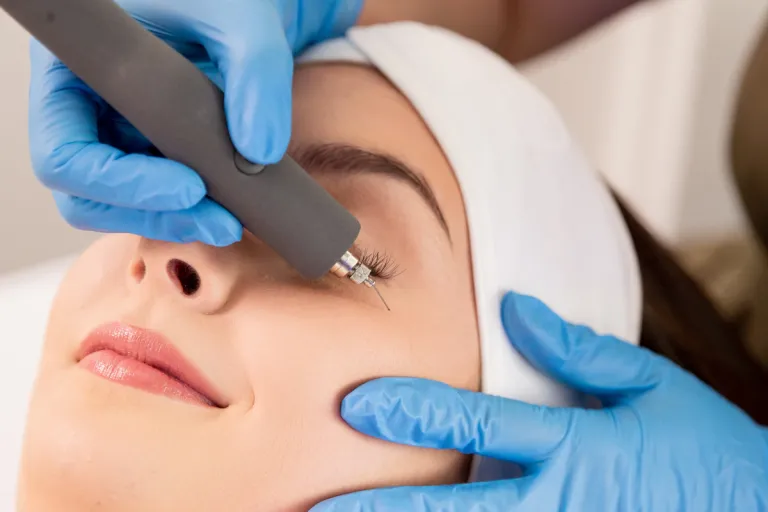
When we started offering plasma pen treatments at ELLEMES, we evaluated several devices on the market. We chose the Subnovii. This post explains why — not as a sales pitch for the manufacturer, but because the device you are being treated with matters, and most patients never think to ask about it.
If you are considering a plasma pen treatment anywhere, this should help you understand what to look for and what questions to ask before you book.
What a Plasma Pen Actually Does
SubNovii produces an ionized electrical arc from an electrode held above the skin to the tissue. The electrode does not touch the skin, but the energy causes thermal tissue injury. Healing and any cosmetic change develop over time and vary by patient.
This is why the treatment is also called fibroblast therapy. The visible tightening you see during the procedure is real, but the deeper structural improvement — the collagen remodeling — happens gradually in the weeks and months afterward.
The most common treatment areas are hooded eyelids, crow’s feet, lip lines, and jawline laxity — areas where topical products have limited reach and where surgery has traditionally been the only meaningful option. Plasma pen fills the gap between skincare and the operating room.
Not All Plasma Devices Are the Same
This is the part that most marketing materials skip over, and it is the part that matters most.
There are dozens of handheld plasma devices available today, and they range dramatically in quality, clearance status, and the type of energy they deliver. Some are legitimate medical devices that have gone through the FDA’s 510(k) clearance process. Others are consumer-grade pens sold online for a few hundred dollars with no regulatory oversight at all. From the outside, they can look similar. From a clinical standpoint, they are not.
The differences include the energy delivered, its controls, and the exact purpose reviewed by the FDA. SubNovii K201738 is cleared for removal and destruction of skin lesions and tissue coagulation; that is not an FDA-cleared eyelid-lift or general skin-tightening indication. Is Your Plasma Pen FDA Approved? How to Check (and Why It Matters) explains why device registration alone does not establish clearance.
What LF+ Technology Means (and Why We Chose It)
The Subnovii uses what the manufacturer calls LF+ technology — a proprietary low-frequency plasma delivery system. Here is what that means in practical terms and why it influenced our decision.
Devices differ in energy delivery, controls, and labeling. Frequency alone cannot establish which is more comfortable, causes less injury, or needs fewer sessions. Those comparisons require evidence for the exact devices and procedures.
LF+ is the manufacturer’s name for its delivery technology. It is one feature considered in device selection, but the name does not prove superior results or freedom from burns, scarring, or pigment changes.
More precise energy placement. The Subnovii allows us to place plasma energy exactly where it needs to go — dot by dot — with consistent spacing and depth. This matters especially on delicate areas like the eyelids, where millimeters make a difference. Inconsistent energy delivery creates uneven results and increases the risk of complications. Precision is not a luxury with plasma — it is the entire point.
Plasma pen treatment is not painless. We apply topical numbing before treatment, and patients may describe warmth, tingling, or sharpness. Comfort varies by area and individual; this is not evidence that SubNovii is more comfortable than every high-frequency device.
Patients should plan for visible recovery such as redness, swelling, and crusting. Seven to ten days is a planning estimate, not a guarantee that all signs or risks have resolved. Ask about longer recovery and what symptoms should prompt a call.
Lauren’s Perspective
Lauren Siso, our founder, Licensed Esthetician and Assistant Laser Practitioner, was one of the early clinical adopters of the Subnovii. She was part of a published expert panel in Observations in Aesthetics discussing the device alongside board-certified surgeons and dermatologists — and she has now performed hundreds of plasma pen treatments at ELLEMES.
The comments below describe Lauren’s clinical perspective. Statements about a unique treatment role are opinions, not evidence from a comparison trial or a guarantee that plasma treatment will match surgery or outperform other options.
“The patients who benefit most from plasma pen are the ones who have real laxity — hooded eyelids, loose skin under the chin, deep lip lines — but are not ready for surgery, or do not want surgery, or do not need surgery yet,” Lauren explains. “Before Subnovii, the honest answer for those patients was that nothing non-invasive was going to produce the degree of tightening they wanted. RF microneedling helps, lasers help, but for actual tissue contraction on the eyelids or jawline, plasma pen is in a category of its own.”
She is also candid about what it does not do. “Plasma pen is not a replacement for a surgical blepharoplasty in patients with severe laxity. It is not a substitute for filler in patients who have lost volume. And it is not appropriate for every skin type — patients with darker skin tones have a higher risk of post-inflammatory hyperpigmentation, and that has to be evaluated carefully during consultation. I would rather turn someone away from a treatment than put them through downtime for a result that might come with complications.”
That willingness to say no is part of why we trust the Subnovii in our practice — it produces real, visible results on the right candidates, and we are selective about who those candidates are.
What the Subnovii Does Not Do
No device does everything, and being clear about limitations is part of being honest about what we offer.
SubNovii produces a thermal tissue effect. It does not replace volume correction with dermal fillers or muscle-relaxing treatment with Botox or Dysport. BBL and chemical peels also have different indications and risks; no option is automatically required simply because a concern is present.
For selected concerns, we may discuss plasma treatment alongside other options. Expected benefit, cosmetic-use evidence, skin type, healing, and risks should guide the decision; no result is guaranteed by the device brand.
How Plasma Pen Fits into a Broader Treatment Plan
Combining treatments is not automatically better. A plan may include one procedure, staged procedures after healing, skincare alone, or no treatment, depending on the concern and risks.
A common approach at ELLEMES is to start with the Subnovii for structural tightening — eyelids, jawline, lip lines — and then layer in RF microneedling for deeper collagen stimulation, BBL for tone and pigmentation, and medical-grade skincare from Revision or SkinBetter Science to maintain and protect results at home. The specific combination depends entirely on what your skin needs, which is why a consultation comes first.
A one-to-three-year cosmetic result is an estimate, not a duration established by SubNovii’s FDA clearance. Response and longevity vary; additional sessions should depend on reassessment rather than a guaranteed maintenance schedule.
The Bottom Line on Why We Use It
We selected SubNovii for its device controls and defined FDA clearance. That clearance should be distinguished from cosmetic claims about eyelids, lip lines, or jawline tightening. Consultation should cover likely benefit, limitations, and possible complications.
If you are considering plasma pen treatment — at ELLEMES or anywhere else — the most important thing you can do is ask about the device being used, verify its FDA clearance status, and make sure your provider has meaningful experience with it. The device matters. The provider matters more.
Learn more about Plasma Pen at ELLEMES →
Book a complimentary consultation →
ELLEMES Medical Spa is located at 5505 Peachtree Dunwoody Road in Sandy Springs, GA — serving patients from Buckhead, Brookhaven, Dunwoody, and greater Atlanta.
Sources for the clinical information: SubNovii FDA clearance K201738.