
Esthetician vs. Dermatologist: Which One Do You Actually Need?
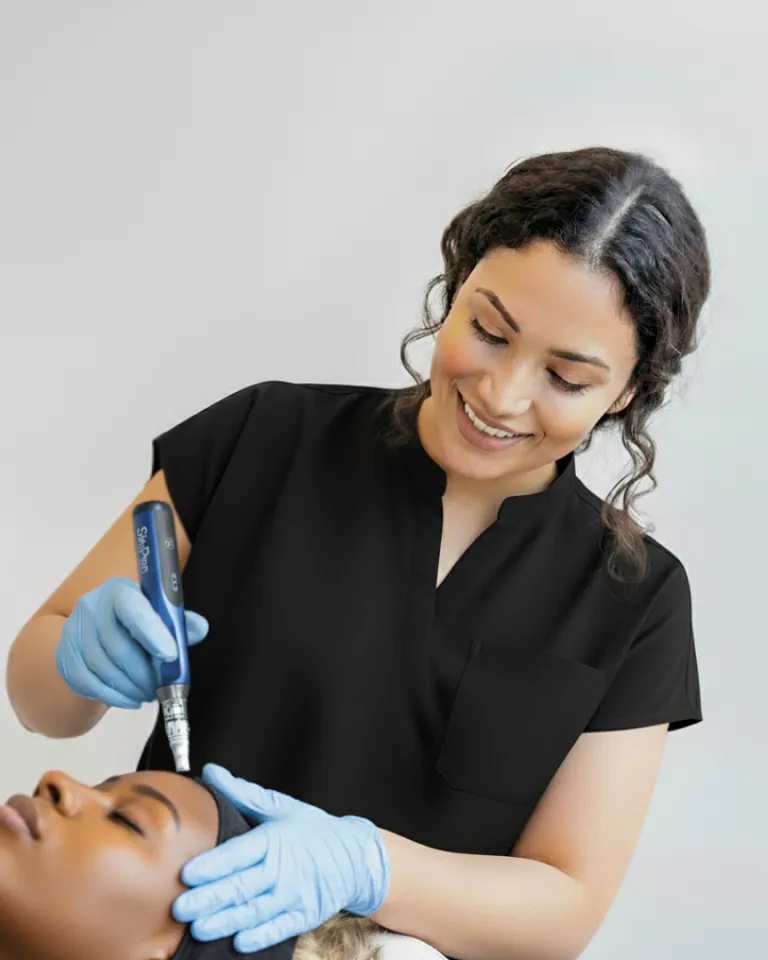
If you are trying to figure out whether you need an esthetician or a dermatologist, you are asking the right question — but it is not quite the right framing. These are not competing options. They are different professionals who do different things, and in many cases, the best version of your skin care involves both. The confusion is understandable, though, because there is real overlap in what they treat and the line between cosmetic and medical skin care is not always obvious from the outside.
Here is a clear breakdown of what each professional does, when you need one versus the other, and when you need both.
What an Esthetician Actually Does
An esthetician is a licensed skin care professional trained in cosmetic skin treatments. That includes facials, chemical peels, microneedling, dermaplaning, laser treatments, and a wide range of other procedures designed to improve the appearance, texture, and health of your skin. Estheticians complete specialized training in skin anatomy, product chemistry, and treatment protocols, and they are licensed by the state to perform these services.
What estheticians do not do is diagnose or treat skin diseases. They cannot prescribe medication, and they are not trained to identify conditions that require medical intervention. Their focus is on cosmetic improvement and maintenance — clearing congestion, improving hydration, reducing visible signs of aging, managing acne through topical and procedural treatments, and helping you build a skin care routine that actually works.
The distinction matters because a lot of people assume “cosmetic” means superficial. It does not. Treatments like RF microneedling, medical-grade chemical peels, and BBL laser therapy produce measurable changes in skin structure and function. These are serious treatments performed by trained professionals — they just happen to fall on the cosmetic side of the line rather than the medical side.
What a Dermatologist Actually Does
A dermatologist is a physician who has completed medical training and specialty training in skin, hair, and nail conditions. Licensure and board certification are distinct credentials; check an individual physician’s current qualifications rather than assuming every dermatologist holds the same certification.
Dermatologists diagnose and treat conditions such as eczema, psoriasis, rosacea, severe acne, and skin cancer. They also evaluate suspicious lesions. The need for screening when there are no symptoms depends on personal risk and discussion with a clinician.
Some dermatologists also offer cosmetic treatments like Botox and dermal fillers, but cosmetic services are typically not their primary focus. Their training and expertise center on diagnosing and treating disease.
Med Spa Estheticians vs. Day Spa Estheticians
Not all esthetician settings are created equal, and this is where a lot of the confusion comes from. The scope of what an esthetician does varies significantly depending on whether they practice in a day spa or a medical spa.
At a day spa, estheticians typically focus on relaxation-oriented facials, basic extractions, waxing, and retail skin care. These are beneficial treatments, but they use consumer-grade products and operate within a narrower scope of practice.
At a medical spa, estheticians work under the supervision of a medical director and have access to medical-grade treatments and technology that a day spa simply cannot offer. That includes devices like fractional lasers, radiofrequency microneedling systems, professional-grade chemical peels, and advanced facial platforms like HydraFacial. Medical-grade skincare lines such as SkinBetter Science and Revision Skincare are also available through med spas, whereas day spas generally carry consumer-grade brands.
The practical difference is significant. A day spa facial is a pleasant maintenance step. A med spa treatment plan can meaningfully change the texture, tone, and clarity of your skin over time. If you are investing in your skin beyond basic upkeep, a medical spa is where you want to be.
When to See a Dermatologist
There are situations where a dermatologist is clearly the right call, and no amount of cosmetic treatment will substitute for a medical evaluation. See a dermatologist if you are dealing with any of the following: a new or changing mole, a rash or skin condition that is not responding to over-the-counter treatment, persistent or severe acne that has not improved with topical approaches, skin that is itchy or inflamed without a clear cause, any lesion that is growing or bleeding or does not heal, or a family history of skin cancer and you are overdue for a screening.
The general rule is straightforward: if something on your skin concerns you medically — if it might be a disease, an infection, or something that needs a diagnosis — start with a dermatologist. You can always add cosmetic treatments later once any underlying conditions are managed.
When to See an Esthetician
An esthetician is the right starting point when your goals are cosmetic — you want your skin to look and feel better, but you are not dealing with a medical condition that needs diagnosis. Common reasons people book with an esthetician include dull or congested skin, fine lines and early signs of aging, uneven skin tone or texture, mild to moderate acne and post-acne marks, preparing for an event, or building a skin care routine that actually fits your skin.
If you are not sure whether your concern is cosmetic or medical, a consultation at a reputable medical spa is a good first step. A good esthetician — especially one practicing in a med spa with medical oversight — will recognize when something falls outside their scope and refer you to a dermatologist.
When You Need Both
For many people, the best outcomes come from working with both a dermatologist and an esthetician — not choosing one over the other. Here is how that works in practice.
A common example is acne. A dermatologist can prescribe medication to address the underlying hormonal or bacterial causes of persistent breakouts. Meanwhile, an esthetician can provide treatments like HydraFacials and chemical peels to manage active congestion, reduce scarring and hyperpigmentation, and maintain clear skin between dermatology appointments. The medical treatment handles the disease; the cosmetic treatment handles the skin.
Another common scenario involves aging and sun damage. A dermatologist monitors your skin for precancerous changes and manages conditions like rosacea or melasma with prescription therapy. An esthetician complements that with treatments like BBL laser therapy, RF microneedling, or medical-grade peels to address the visible signs of aging and sun exposure that fall outside the dermatologist’s treatment plan.
The two work best as a team, not as an either-or decision. If you already see a dermatologist for a skin condition, let your esthetician know what medications you are on and what your dermatologist is treating — some cosmetic treatments need to be adjusted around certain prescriptions like retinoids or antibiotics.
Common Misconceptions
“Estheticians are basically just giving you a fancy face wash.” This might have been a fair characterization decades ago. It is not now. Modern med spa estheticians operate advanced laser systems, perform treatments that stimulate collagen remodeling at the dermal level, and manage complex treatment plans that produce results you can measure, not just feel. The profession has evolved dramatically, and the technology available in a well-equipped medical spa reflects that.
“A dermatologist can do everything an esthetician does, but better.” Dermatologists are experts in skin disease. That does not automatically make them the best choice for cosmetic treatments. Most dermatology practices dedicate the majority of their time to medical care — screenings, biopsies, prescription management. An esthetician who performs HydraFacials, peels, and microneedling dozens of times a week has a depth of hands-on experience with those specific treatments that most dermatologists simply do not need to develop.
“You only need to see a dermatologist if something is seriously wrong.” New, changing, bleeding, or nonhealing skin lesions deserve prompt assessment. For adults and adolescents without symptoms, the USPSTF finds insufficient evidence to recommend routine visual skin-cancer screening for everyone. That does not mean ignoring concerns or foregoing an individualized screening plan when personal or family history raises risk.
“Med spas are unregulated.” Reputable medical spas operate under the supervision of a licensed medical director, and their providers are licensed and trained for the specific treatments they perform. That said, quality does vary — which is why doing your research, checking credentials, and reading reviews matters.
Skin Care at ELLEMES Medical Spa
At ELLEMES Medical Spa, our team of licensed estheticians works under medical oversight to provide treatments that go well beyond what a traditional spa can offer. Our providers are trained and certified in advanced platforms including HydraFacial, Sciton laser systems, radiofrequency microneedling, and a full range of professional chemical peels. We also carry medical-grade skincare lines — including SkinBetter Science and Revision Skincare — so your at-home routine supports the results you are getting in-office.
If you are not sure where to start, that is exactly what a consultation is for. We will assess your skin, talk through your goals, and help you figure out the right treatment path — whether that is a single treatment, a series, or a plan that works alongside what your dermatologist is already doing.
Book a complimentary consultation →
ELLEMES Medical Spa is located at 5505 Peachtree Dunwoody Road in Sandy Springs, GA — serving patients from Buckhead, Brookhaven, Dunwoody, and greater Atlanta.