
Lip Filler Swelling Stages: What to Expect Day by Day
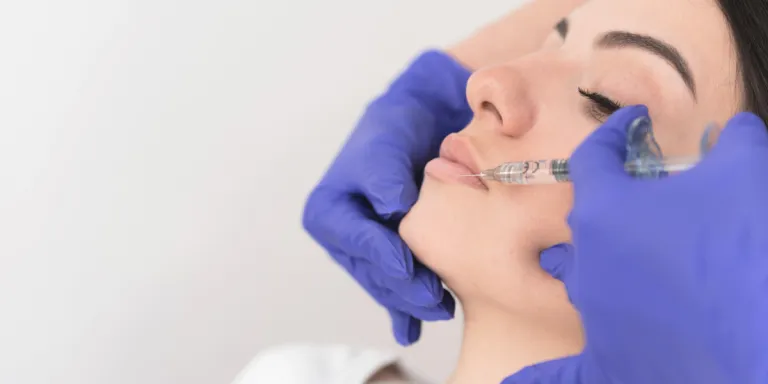
You just got lip filler and your lips look significantly larger than what you discussed with your injector. You’re standing in front of the mirror wondering whether something went wrong, whether you got too much, and whether your lips are going to stay this size. This is the most common post-treatment concern patients have — and in nearly every case, the answer is the same: what you’re seeing is swelling, not your final result.
Lip filler swelling is a normal, predictable inflammatory response to the injection process itself. It follows a consistent pattern, peaks within 24–48 hours, and resolves progressively over 7–10 days. Understanding this timeline — and knowing what’s normal at each stage — prevents unnecessary anxiety and helps you evaluate your actual results once the swelling clears.
This post walks through each phase of the swelling process, explains what’s happening biologically at each stage, and covers what warrants a call to your provider versus what’s simply part of the normal healing arc.
Why Lip Filler Causes Swelling in the First Place
The swelling isn’t caused by the filler itself sitting in your lips taking up extra space. It’s caused by your body’s inflammatory response to the injection process — specifically, three overlapping mechanisms.
Needle trauma. A fine needle passes through lip tissue multiple times during the injection process. Each entry point creates micro-trauma that triggers your body’s acute inflammatory response. Blood flow to the area increases, capillaries dilate, and fluid accumulates in the surrounding tissue. This is the same basic mechanism that causes any injection site to swell — a flu shot, a blood draw, a dental injection. The lips just happen to be one of the most vascular areas of the body, which amplifies the response.
Hyaluronic Acid’s hydrophilic properties. HA filler is hydrophilic — it actively draws water to itself. In the first 24–48 hours after placement, the gel absorbs water from the surrounding tissue as it integrates, temporarily increasing the total volume in the lip beyond what the filler alone accounts for. This water absorption stabilizes over the first week as the filler reaches equilibrium with the tissue.
Histamine release. The physical disruption of the tissue triggers a localized histamine response, which causes additional vasodilation and fluid accumulation. This is why some patients experience mild itching alongside swelling — it’s a histamine-mediated reaction, not an allergic response to the filler.
All three mechanisms are temporary. They follow a predictable arc, and they resolve on their own without intervention in the vast majority of patients.
Day-by-Day Swelling Timeline
Individual variation exists — some patients swell more than others, and the degree of swelling can even vary between appointments in the same patient. But the general pattern is consistent enough that your injector at ELLEMES can predict it with reasonable accuracy.
Day 0: Treatment Day
Immediately after injection, your lips will look noticeably fuller than your final result. Some of this is the filler itself, but a significant portion is the initial inflammatory response and the residual effects of the numbing cream, which causes mild tissue distension on its own.
You may notice small injection points (pinprick marks) along the lip border or body. These close within hours. Mild tenderness is normal — the lips will feel sore to the touch, similar to how a bruise feels when pressed. Some patients develop slight bruising within the first few hours, particularly if a blood vessel was nicked during injection. The lips may feel firm, tight, or “hard” compared to their normal texture. This is the filler sitting in the tissue before it’s had time to integrate.
What to do: Apply ice gently (wrapped in a cloth, not directly on skin) for 10 minutes on, 10 minutes off. Avoid touching or pressing on the lips. Don’t apply makeup, lipstick, or other products for 6–8 hours. Follow the full aftercare instructions provided at your appointment.
Day 1: Peak Swelling Begins
This is typically the most alarming day for patients. You’ll wake up with lips that are noticeably more swollen than they were when you left the clinic. This is normal. Overnight, gravity and the continued inflammatory response cause fluid to accumulate, and lying flat for several hours allows the swelling to distribute more evenly (or unevenly, depending on your sleeping position).
The upper lip often swells more than the lower lip, even if more filler was placed in the lower lip. This is because the upper lip tissue is thinner and more reactive to the inflammatory process. Asymmetry between the left and right sides is also common at this stage — one side may swell faster or more than the other. This does not indicate uneven filler placement. It indicates uneven swelling, which is a different thing entirely.
Bruising, if present, may become more visible as it develops fully. Colors range from faint purple-red to deeper blue-purple depending on the depth of the bruise and your skin tone. Tenderness continues, and the lips may feel stiff when you try to make certain expressions.
What to do: Continue icing. Sleep with your head slightly elevated (an extra pillow is sufficient). Avoid strenuous exercise, hot showers, saunas, and alcohol — all of which increase blood flow and can worsen swelling. Drink plenty of water. Arnica (topical or oral) may help with bruising, though the clinical evidence is modest.
Day 2: Peak Swelling
For most patients, day 2 represents the true peak of swelling. This is the point where your lips will look their largest and least like your final result. If you’re going to panic about the size of your lips, this is the day it happens — and the day you most need to remember that what you’re seeing is temporary.
The swelling on day 2 can make your lips look 30–50% larger than the actual final result. That’s a significant visual difference. The texture may feel lumpy or uneven under your fingers — this can be the filler itself (which hasn’t fully softened and integrated yet) or localized pockets of swelling. In most cases, it’s a combination of both.
Some patients notice that the lip border (vermillion border) looks blurred or less defined than it did immediately after injection. This is swelling obscuring the precise placement your injector created. The definition will return as the swelling subsides.
What to do: The same as day 1. Continue ice, hydration, elevated sleeping, and avoidance of heat and alcohol. Resist the urge to massage or manipulate the lips unless your injector specifically instructed you to do so. Massaging swollen tissue can worsen inflammation and displace filler that hasn’t yet settled.
Days 3–4: Swelling Begins to Resolve
This is the turning point. Swelling starts to decrease noticeably, and the shape your injector created begins to emerge from behind the inflammation. Most patients feel significantly more relieved at this stage because the lips are starting to look proportional again.
The firmness softens. The filler is beginning to integrate with your natural tissue, and the HA gel is reaching its equilibrium hydration level. The lips feel more natural when you touch them — less like something foreign is inside and more like a slightly fuller version of your own lips.
Bruising, if present, may shift from deep purple to yellowish-green as it begins to resolve. Some bruising lasts longer than the swelling and may persist into the following week. This is cosmetic, not clinical — it has no bearing on the quality of your result.
Asymmetry that was caused by uneven swelling starts to correct itself. If one side was noticeably more swollen than the other, the differential should be narrowing at this point.
Days 5–7: Approaching Final Form
By day 5, most of the inflammatory swelling has resolved. What remains is close to your actual result — though not identical, because the filler continues to settle and soften for several more days. The lips feel more like your own. Tenderness is mostly gone. You can comfortably apply lipstick, eat normally, and make full facial expressions without restriction.
Patients who were unhappy on day 2 are typically quite pleased by day 5–7. The shape is defined, the volume is proportional, and the texture is natural. Bruising may still be visible but is easily concealed with makeup at this stage.
By day 7, most patients can evaluate their result with reasonable accuracy. The lips are close enough to their final state that you can assess whether you’re happy with the volume, shape, and symmetry.
Days 7–14: Final Settling
The last phase involves subtle refinement that most patients won’t notice on a day-to-day basis. The filler completes its integration with the tissue, reaching its final softness and moldability. Any residual firmness or mild unevenness that persisted through week one typically resolves by day 10–14.
This is when your injector considers the result “settled” — and it’s the appropriate time to evaluate whether you want any adjustments. At ELLEMES, if you feel you want additional volume or a minor shape adjustment, your injector can schedule a follow-up 2–4 weeks after your initial treatment. Evaluating the result before the filler has fully settled — particularly in the first 3–5 days — leads to poor decision-making, because you’re assessing swelling rather than the actual outcome.
Factors That Affect How Much You Swell
Not everyone swells to the same degree. Several variables influence the intensity and duration of the swelling response.
The amount of product placed. More filler generally means more injection points and more tissue disruption, which means more swelling. A single syringe typically produces moderate swelling. Patients who receive larger volumes or treat multiple areas in the same session (lips plus chin, for example) may experience more pronounced swelling.
Injection technique. Needle-based injections tend to produce more precise results but can create more point-source trauma than cannula-based techniques. Some injectors use a combination of both. Your injector at ELLEMES selects the approach based on what the specific technique (Russian Lip, Classic Plump, or Cupid’s Bow Enhancement) requires for optimal placement.
Your individual inflammatory response. Some people are simply more reactive to tissue disruption than others. If you tend to swell heavily after dental work, bug bites, or minor injuries, you’ll likely swell more after lip filler. Conversely, patients with a mild inflammatory baseline may find their swelling peaks on day 1 rather than day 2 and resolves by day 4–5.
Medications and supplements. Some medicines and supplements can increase bruising or bleeding. Tell your injector what you take, including prescribed aspirin and anticoagulants. Do not stop, restart, or change prescribed aspirin, anticoagulants, or other medicines for a cosmetic appointment unless the clinician who prescribes them tells you to. Read the NHS guidance on anticoagulant medicines.
Menstrual cycle. Anecdotally (and supported by some clinical observations), patients who receive lip filler during the luteal phase of their menstrual cycle — roughly the week before their period — may experience more pronounced swelling and bruising due to higher progesterone levels, which affect fluid retention and capillary fragility. This isn’t a contraindication, but it’s worth being aware of if you’ve noticed your body retains more fluid during certain phases of your cycle.
What’s Normal vs. What Warrants a Call to Your Provider
This section is the reason this post exists. Most post-filler concerns are normal swelling being misinterpreted as a problem. But a small number of symptoms do warrant prompt attention.
Normal and expected: Swelling that peaks at 24–48 hours and progressively improves. Mild to moderate bruising. Firmness or lumpiness in the first 3–5 days. Tenderness to the touch. Asymmetry during the swelling phase. Mild itching. Slight numbness or tingling as the topical anesthetic wears off. The lips looking “too big” for the first 2–3 days.
Call your provider if you notice: Swelling that continues to worsen after day 3 rather than improving. Severe, disproportionate swelling on one side that isn’t resolving. White or dusky discoloration of the lip tissue (this can indicate a vascular event and requires immediate attention). Intense pain that increases rather than decreases over the first 24–48 hours — particularly pain that feels deep, throbbing, and isn’t relieved by ice or over-the-counter medication. Blisters, skin breakdown, or tissue that appears dark or mottled. Fever, spreading redness, or warmth that suggests infection (rare but possible). Hard, defined nodules that don’t soften with gentle pressure after 2 weeks.
The most time-sensitive concern is vascular compromise — when filler inadvertently compresses or enters a blood vessel, restricting blood flow to the tissue. The signs are blanching (white or grayish discoloration), disproportionate pain, and a mottled or reticular (net-like) pattern on the skin. This is rare, but if you see these signs, contact your provider immediately. HA filler can be dissolved with hyaluronidase to restore blood flow — but the window for effective intervention is narrow, which is why prompt communication matters.
How to Minimize Swelling
You can’t eliminate swelling entirely — it’s a necessary part of the healing process. But you can reduce its intensity and duration with a few straightforward measures.
Pre-treatment: Review your medicines, supplements, bleeding history, and upcoming events with your injector. Ask the prescribing clinician about any proposed medicine change; do not use a general cosmetic-treatment timetable to decide when to stop or restart it.
Post-treatment: Ice consistently for the first 24 hours (10 minutes on, 10 off). Sleep elevated the first 1–2 nights. Avoid exercise, hot showers, saunas, steam rooms, and alcohol for 48 hours. Stay hydrated. Don’t touch, press, or massage the lips unless instructed. Avoid salty foods that promote fluid retention.
What doesn’t work: Antihistamines are sometimes recommended online for post-filler swelling. While they can reduce histamine-mediated itching, they have minimal effect on the primary inflammatory swelling response. They’re not harmful, but they’re not a meaningful intervention either. Similarly, “lymphatic drainage massage” marketed for post-filler recovery has no clinical evidence supporting its effectiveness for lip filler swelling specifically. The swelling resolves on its own timeline regardless.
The Bottom Line on Timing
Don’t evaluate your lip filler result before day 7 at the earliest. Don’t make any decisions about whether you want more or less before day 14. The most common regret in lip filler isn’t getting too much or too little — it’s judging the result too soon and either panicking unnecessarily or requesting changes before the swelling has resolved.
If you’re reading this post on day 1 or 2 after your treatment, the most useful thing you can do is close the mirror, apply ice, drink water, and wait. Your injector placed the product deliberately and precisely. The swelling is obscuring that work right now. Give it time.
For questions about your specific result, your provider at ELLEMES is available for follow-up. If you’re experiencing any of the warning signs described above — particularly blanching, severe pain, or worsening swelling after day 3 — don’t wait. Call immediately.
Learn more about lip filler at ELLEMES Medical Spa →
ELLEMES Medical Spa is located at 5505 Peachtree Dunwoody Road in Sandy Springs, GA — serving patients from Buckhead, Brookhaven, Dunwoody, and greater Atlanta.