
PRP Microneedling Side Effects and Downtime: A Day-by-Day Guide
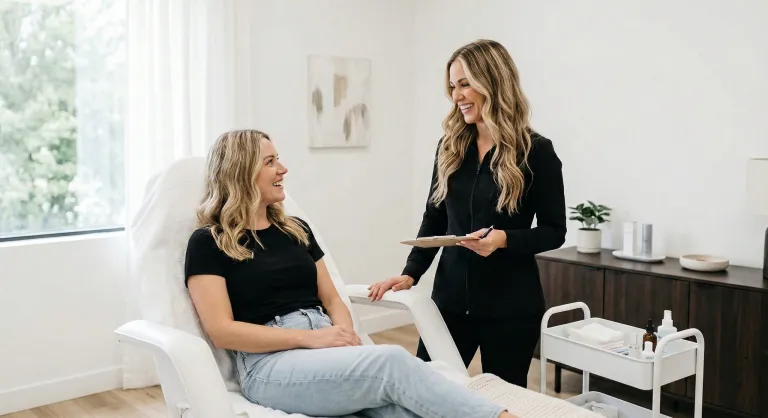
PRP microneedling combines SkinPen microneedling with your own Platelet-Rich Plasma, which means you are dealing with two sources of post-treatment response: the controlled micro-injuries from the needles and the concentrated growth factors from the PRP. The recovery is shorter than most patients expect — you are not hiding from the world for a week — but knowing exactly what each day looks like helps you plan around work, events, and your skincare routine.
Device clearance and combination treatments: The FDA has not cleared microneedling devices for use with PRP or another product. Clearance of a device for its labeled indication does not establish the safety or effectiveness of that combination. Discuss the exact device, proposed use, alternatives, and risks with the treating clinician.
Day 0: Immediately After Treatment
You will leave the clinic with a visibly red face. The redness is uniform across the entire treated area and looks similar to a moderate sunburn. Some patients describe it as more intense than expected in the mirror, particularly under fluorescent lighting. In natural light, it is less alarming.
What you will feel: Warmth, tightness, and mild sensitivity. The skin feels hot to the touch, similar to the sensation after spending too long in the sun. The topical numbing cream is still wearing off during the first hour, so discomfort is minimal initially and may increase slightly as sensation returns.
What you will see: Pinpoint bleeding spots may be visible in areas where the SkinPen was used at deeper settings, particularly on acne scars or thicker skin. A thin layer of PRP and post-procedure serum will be on your skin — do not wash this off. The PRP continues to absorb through the microchannels for several hours after treatment.
What to avoid: No touching your face with unwashed hands. No makeup. No active skincare products (retinol, vitamin C, AHAs, BHAs). No exercise or anything that significantly raises your core temperature. No direct sun exposure. Sleep on a clean pillowcase — silk or satin reduces friction on sensitized skin.
Day 1: Peak Redness
This is typically the most visibly red day. The redness may have deepened slightly overnight as the inflammatory healing cascade activates. Some patients notice mild swelling, particularly around the eyes and cheeks if those areas were treated at deeper depths.
Skin feel: Tight and dry. The microchannels are closing but the skin barrier is still compromised. You may feel a rough, sandpapery texture when you touch your face — this is normal and is the beginning of the micro-exfoliation process.
PRP and recovery: PRP should not be promised to shorten redness by a fixed number of hours. Recovery depends on the procedure and patient; do not schedule an event on the assumption that adding PRP guarantees faster healing.
Can you work? If you work from home, yes. If you work in person, the redness is noticeable. Some patients feel comfortable going into the office and explaining they had a skin treatment. Others prefer to schedule the procedure on a Thursday or Friday to recover over the weekend. Makeup is still not permitted on day one.
Day 2: Redness Fading, Tightness Increasing
The intense redness from days zero and one begins to calm. Most patients describe their skin as pink rather than red at this point — closer to a mild flush than a sunburn. Swelling, if present, is resolving.
Texture changes: The skin feels noticeably tighter and drier. You may see very fine flaking beginning in some areas, particularly the forehead and around the nose where the skin is thinner. This is the damaged surface layer starting to shed as new skin forms beneath it. Do not pick at or peel the flaking skin — let it separate on its own.
Makeup: Most providers clear patients to wear mineral-based makeup after 24 hours, though 48 hours is safer if your skin still feels raw. Check the aftercare instructions from your provider at ELLEMES. When you do apply makeup, use clean brushes and avoid heavy coverage products that can clog the still-healing microchannels.
Skincare: Keep it minimal. Gentle, fragrance-free cleanser and a plain moisturizer. Nothing active — no retinol, no acids, no exfoliants. Your skin barrier is still repairing and active ingredients will cause irritation, not improvement.
Days 3–5: The Peeling Phase
This is the phase that surprises patients who were not warned about it. The visible redness is largely gone, but the skin starts to peel or flake — sometimes in fine sheets, sometimes in small dry patches. It looks like mild dry skin or light sunburn peeling, not dramatic sheets of skin.
Where peeling is most noticeable: The forehead, nose, and chin tend to peel first because the skin is thinner and turns over faster. The cheeks may peel later or less visibly. If the neck and chest were included in your treatment, those areas often peel on a slightly delayed timeline — days four through seven.
What not to do: Do not exfoliate, scrub, or use any device to accelerate the peeling. Do not pull at loose skin. The temptation is real, but forcing the process can cause irritation, pigmentation changes, or damage to the new skin forming underneath. Let gravity and your gentle cleanser do the work.
Hydration helps: A fragrance-free moisturizer applied two to three times daily keeps the peeling manageable and reduces the tight, itchy feeling that accompanies it. Hyaluronic acid serums (without other active ingredients) are generally safe to introduce at day three or four, though confirm with your provider. Staying hydrated internally matters too — your skin is rebuilding and water supports that process.
Days 5–7: Back to Normal (Mostly)
By day five to seven, most patients look and feel normal. The redness is gone, peeling has completed or nearly completed, and the skin surface is smooth again. You may already notice that your skin looks slightly better than it did before treatment — smoother texture, more even tone, a subtle firmness.
Skincare reintroduction: This is typically when you can begin adding active products back into your routine, but do it gradually. Start with vitamin C serum, which supports collagen production and is well tolerated on healed skin. Wait until day seven to ten before reintroducing retinol or chemical exfoliants. Reintroduce one product at a time so you can identify any irritation.
Sun protection: Your skin is more photosensitive for at least two weeks after treatment. Mineral SPF 30 or higher every day is non-negotiable — even if you are not spending time outdoors intentionally. UV damage during this window can cause hyperpigmentation that takes months to resolve, particularly in patients with deeper skin tones. If you are being treated for hyperpigmentation or melasma, sun protection after PRP microneedling is especially critical.
Weeks 2–12: The Collagen-Building Phase
The visible recovery is over, but the treatment is still working. The collagen remodeling triggered by the combination of microneedling and PRP unfolds over two to three months. This is when the actual results develop — firmer skin, shallower scars, improved texture, and reduced fine lines.
You will not see dramatic changes overnight. The improvement is gradual enough that you may not notice it day to day. Comparing photos taken before treatment to photos at the eight- or twelve-week mark is the most reliable way to assess progress. Your aesthetician will evaluate your skin at your next appointment and determine whether additional sessions are warranted.
For patients completing a multi-session series for acne scarring, each session restarts this collagen-building window. The cumulative effect across three to six sessions is what produces the meaningful scar improvement — not any single session in isolation.
Side Effects That Are Normal vs. Side Effects That Need Attention
The vast majority of post-treatment reactions are expected and self-resolving. But it helps to know the line between normal recovery and something worth calling about.
Normal and expected: Redness for 24–48 hours. Mild swelling for one to two days. Tightness and dryness. Pinpoint bleeding on the day of treatment. Fine peeling on days three through five. Minor itching during the peeling phase. Temporary skin sensitivity to products you normally tolerate.
Contact your provider if you experience: Redness that is intensifying rather than improving after 48 hours. Swelling that is increasing on day two or three. Any sign of infection — increasing warmth, pain, yellow or green discharge, or a localized area that looks significantly worse than the surrounding skin. A rash or hives (rare, but possible in response to the post-procedure serum). Any darkening or discoloration of the treated skin that was not present before treatment. Persistent bumps or pustules that develop several days after the procedure.
A note on breakouts: Some patients experience a mild breakout in the days following PRP microneedling. This is sometimes called “purging” — the treatment accelerates cell turnover, which can bring pre-existing congestion to the surface. A few small breakouts in the first week are not uncommon and resolve on their own. A widespread or cystic breakout is different and should be reported to your provider. Patients with active acne are generally advised to address the acne before starting a microneedling series for this reason.
How Downtime Compares to Similar Treatments
Patients choosing between several skin treatments at ELLEMES often ask how PRP microneedling recovery stacks up against alternatives. Here is a general comparison.
Standard microneedling (without PRP): Redness and peeling can occur with either approach. The addition of PRP does not guarantee a shorter recovery period; ask for evidence relevant to the proposed treatment.
HydraFacial: It has different goals and usually little social downtime, but temporary redness, irritation, or tightness can occur. Follow the aftercare instructions for the exact treatment rather than assuming immediate makeup is suitable for everyone.
Chemical peels: Varies widely depending on depth. A light peel has less downtime than PRP microneedling. A medium-depth peel (like a VI Peel) has comparable or slightly longer peeling — typically five to seven days of visible shedding. A deep peel has substantially more downtime.
MOXI laser: Similar recovery timeline to PRP microneedling — redness for one to two days, mild peeling for three to five days. MOXI targets pigmentation and surface texture more directly, while PRP microneedling focuses on collagen stimulation and scar remodeling. Some patients alternate between the two for comprehensive skin improvement.
Planning Around Your Schedule
The practical reality is that most patients in the Sandy Springs and Buckhead area need to plan around work and social commitments. Here are the scheduling considerations that matter most.
Minimum social downtime: Two full days. If you have the treatment on a Friday afternoon, you are generally comfortable in public by Sunday. Makeup can cover residual pinkness by day two to three if needed.
Event timing: Book your PRP microneedling session at least two weeks before any major event — wedding, professional headshots, reunion. You want the redness and peeling fully resolved and the initial collagen improvement visible. Two to three weeks before an event is the sweet spot. The day before or the week of is not appropriate for this treatment.
Exercise: Avoid strenuous exercise for 24 hours. The combination of sweat, heat, and bacteria on gym equipment is a recipe for irritation on freshly treated skin. Light walking is fine on day one. Most patients return to their full exercise routine by day two or three.
Between sessions: If you are doing a multi-session series with four-week intervals, treatments like HydraFacial or a gentle facial can be done between PRP sessions to maintain hydration and clarity without interfering with the collagen remodeling process. Your aesthetician can recommend the right timing.
Learn more about PRP microneedling at ELLEMES Medical Spa →
Book a complimentary consultation →
ELLEMES Medical Spa is located at 5505 Peachtree Dunwoody Road in Sandy Springs, GA — serving patients from Buckhead, Brookhaven, Dunwoody, and greater Atlanta.