
RF Microneedling Aftercare: What to Do (and Avoid) After Your Vivace Session
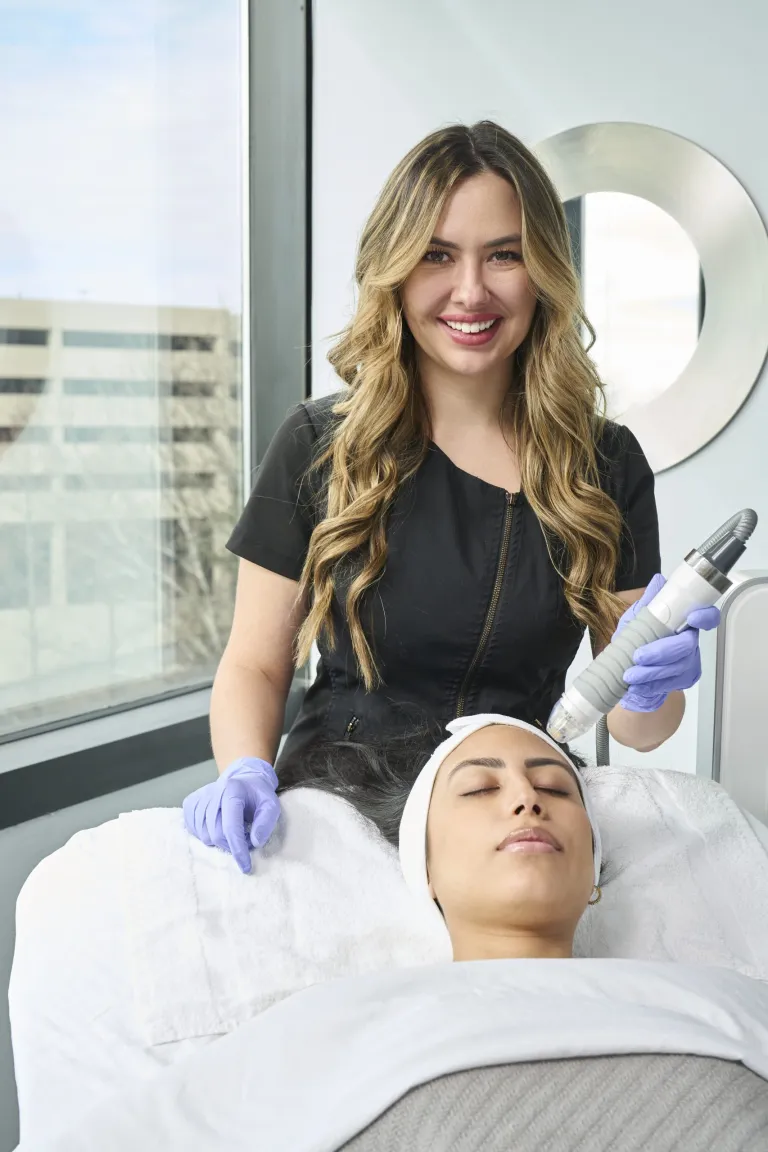
RF microneedling aftercare is straightforward, but the first 72 hours matter more than most patients expect. The treatment creates thousands of micro-channels in the skin while delivering radiofrequency heat into the deeper dermis — and those channels need to close properly for the collagen remodeling process to work. What you put on your skin (and what you avoid) during the healing window directly affects your results.
The time frames below describe general aftercare, not a guarantee that skin has healed by a particular hour or day. Follow the written plan from your treating clinician, and contact them about symptoms or product questions. These considerations apply when planning Vivace RF Microneedling aftercare.
The First 6 Hours: Leave Your Skin Alone
Immediately after your Vivace session, your provider applies a calming serum to the treated area. For the next 6 hours, the most important thing you can do is nothing. Do not wash your face, apply products, or touch the treatment area. The micro-channels are still open during this window, and introducing anything — even a gentle cleanser — can cause irritation or interfere with the initial healing response.
Redness, warmth, and mild swelling can occur after treatment. A visible reaction does not prove that a treatment is effective, and severe or worsening pain, blistering, or unusual skin changes should not be dismissed as expected inflammation.
Ask the treating clinician how to manage warmth or discomfort and whether a cool compress is appropriate. Do not apply ice directly or assume that avoiding all cooling is necessary for collagen formation.
Hours 6 Through 24: Gentle Cleansing Only
After the first 6 hours, you can wash your face with a gentle, fragrance-free cleanser. Use lukewarm water — not hot. Pat dry with a clean towel. Do not rub, scrub, or use a washcloth on the treated skin.
Apply only the products recommended for your particular treatment and recovery. A hyaluronic acid label or “clinical-grade” description does not establish that a serum is suitable for freshly treated skin. FDA device clearance does not cover delivering cosmetics, drugs, or PRP through microneedling channels.
Do not wear makeup for the first 24 hours. Mineral makeup can typically be applied the following day, but conventional liquid foundations and concealers contain ingredients that can clog the still-healing micro-channels. If you have an event the day after your session, plan accordingly — or schedule your Vivace treatment with an extra day of buffer.
Days 2 Through 5: The Active Healing Window
By day two, most patients notice that redness has faded significantly. Some experience mild flaking or a rough texture — this is the skin’s outer layer turning over as new cells form underneath. Do not pick at or exfoliate this skin. Let it shed naturally.
Continue with gentle skincare only. Cleanser, moisturizer, and SPF. That is your entire routine for days 2 through 5. This is not the time to reintroduce your retinol, your chemical exfoliant, or your treatment serums. The deeper dermal layers are still actively remodeling collagen, and harsh topicals can cause inflammation that works against the healing process.
SPF 30 or higher is non-negotiable. After RF microneedling, the skin is more photosensitive than usual. Apply a broad-spectrum sunscreen every morning — mineral (zinc oxide or titanium dioxide) formulas tend to be less irritating than chemical sunscreens during this period. Reapply if you are outdoors for extended periods. For patients in the Sandy Springs and Atlanta area, this is especially important during the warmer months when UV exposure is intense even on overcast days.
Days 5 Through 7: Reintroducing Active Products
Reintroduce active products only when your provider advises and the skin has recovered. Day five is a planning estimate, not automatic clearance; burning, persistent redness, or broken skin calls for reassessment.
Retinoids (tretinoin, retinol, adapalene) should wait until day 7 at minimum. These are the most common irritants after RF microneedling, and reintroducing them too early is the number one aftercare mistake we see. If your skin still feels sensitive at day 7, wait longer. There is no benefit to rushing it.
Chemical exfoliants (AHAs, BHAs) follow the same timeline. Glycolic acid, lactic acid, and salicylic acid should not be applied to the treated area for at least 7 days. If you use a chemical peel as part of your regular skin maintenance, schedule it at least two weeks away from your Vivace session in either direction.
What to Avoid for 48 Hours After Treatment
Beyond skincare products, there are several activities that can compromise your RF microneedling aftercare during the first 48 hours.
Strenuous exercise: avoid heat, sweat, and friction as instructed during early recovery. Ask when to restart your usual exercise rather than assuming day three is appropriate despite ongoing symptoms.
Hot showers, saunas, and steam rooms: Heat dilates blood vessels and can increase inflammation beyond what is productive. Use lukewarm water for washing and avoid prolonged heat exposure to the face and neck.
Swimming pools and hot tubs: keep the treated skin out of recreational water until it has healed and the treating clinician says it is appropriate. Passing forty-eight hours does not by itself establish that the skin barrier has recovered.
Direct sun exposure: Even with SPF applied, prolonged direct sun during the first 48 hours increases the risk of post-inflammatory hyperpigmentation, particularly in darker skin tones. If possible, limit outdoor time during peak UV hours (10 a.m. to 4 p.m.) for the first two days.
Alcohol consumption: follow the treating clinician’s instructions and account for your medicines and medical history; a one-glass rule cannot establish safety for everyone.
How Aftercare Differs for Neck and Chest Treatments
Patients who receive Vivace on the neck or chest should follow the same general aftercare protocol, with a few additional considerations. The skin on the neck and décolletage is thinner than facial skin and tends to stay red and sensitive for slightly longer — sometimes 48–72 hours rather than 24–48.
Clothing friction matters. Avoid high necklines, scarves, and tight collars for the first 48 hours. The treated skin is sensitive to mechanical irritation, and fabric rubbing against the area can cause unnecessary redness or discomfort. Choose open-collar shirts or V-necks during the initial healing window.
Chest-area patients should avoid underwire bras that sit directly on the treated décolletage for 24–48 hours if the treatment extends to that area. A soft, wireless alternative reduces friction on healing skin.
When to Expect Results (and When Aftercare Actually Ends)
The surface-level recovery from Vivace RF is relatively quick — most patients look and feel normal within 2–3 days. But the deeper collagen remodeling process takes significantly longer. New collagen fibers begin forming within the first week but continue maturing and strengthening for 4 to 8 weeks after each session.
This means your “aftercare” in the broader sense extends beyond the initial healing window. Consistent SPF use, avoiding excessive sun exposure, and maintaining a solid skincare routine all contribute to how well your collagen remodeling progresses. Patients who are diligent with sun protection and hydration between sessions tend to see better cumulative results across a full Vivace series.
Between sessions, your provider may recommend complementary treatments like HydraFacial to keep the skin hydrated and clear, or medical-grade skincare products that support collagen production without interfering with the remodeling process.
What Aftercare Will Not Fix
Aftercare cannot guarantee a result or prevent every complication. The FDA reported serious complications with certain RF microneedling uses in October 2025, including burns, scarring, fat loss, disfigurement, and nerve damage. These reports do not predict an individual patient’s risk, but the possibility of lasting injury belongs in the treatment discussion. If improvement is limited, reassess the plan before buying more sessions rather than assuming additional treatment is required.
Similarly, aftercare will not compensate for chronic, unprotected sun exposure. Patients who skip SPF regularly or spend extended time in direct sun without protection will undermine the collagen remodeling they are paying for. UV damage breaks down collagen — the same collagen the treatment is designed to build.
For patients with surface-level pigmentation concerns alongside texture and laxity, aftercare alone will not address discoloration. A combination approach — pairing Vivace with BBL Photofacial or MOXI Laser — targets both deeper structural remodeling and surface tone correction at different tissue layers.
Learn more about Vivace RF Microneedling at ELLEMES Medical Spa →
Book a complimentary consultation →
ELLEMES Medical Spa is located at 5505 Peachtree Dunwoody Road in Sandy Springs, GA — serving patients from Buckhead, Brookhaven, Dunwoody, and greater Atlanta.
Sources for the clinical information: FDA microneedling device guidance; FDA RF microneedling safety communication, October 2025.