
What Does a Lip Flip Actually Look Like? What to Expect from Real Results
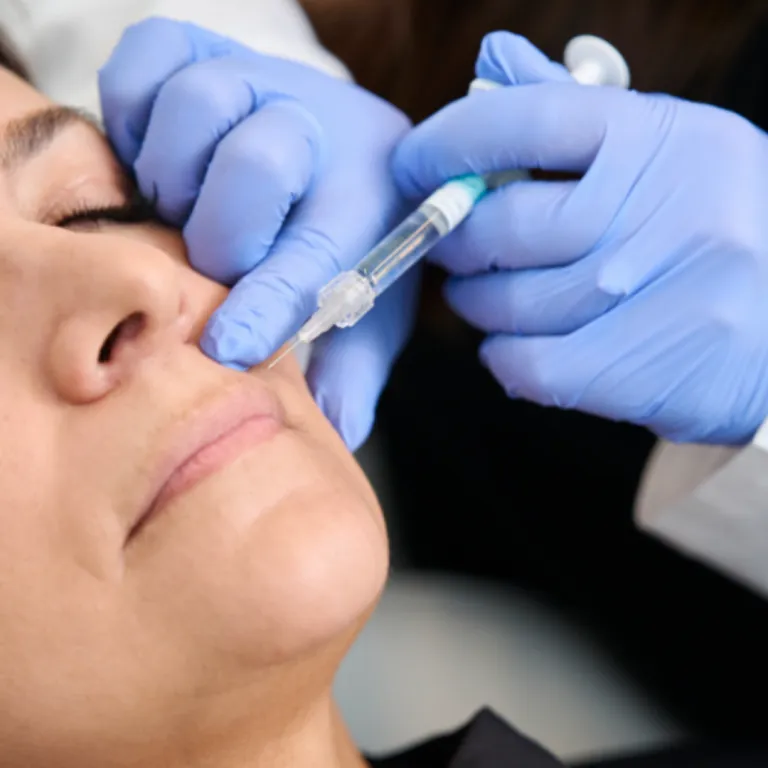
The lip flip is the most frequently misunderstood cosmetic lip treatment in terms of what the result actually looks like. Patients arrive at their consultation having seen “before and after” photos online that range from genuinely accurate to wildly misleading — and the misleading ones set expectations that the treatment cannot meet. A lip flip produces a real, visible improvement. But the scale of that improvement is measured in millimeters, not in dramatic transformation, and understanding that distinction before you book is the difference between satisfaction and disappointment.
Regulatory context: Using botulinum toxin for a lip flip or gummy-smile correction is off-label; these are not indications in the BOTOX Cosmetic prescribing information. Discuss the expected benefit, alternatives, and risks with a qualified injector. Units of different botulinum toxin products are not interchangeable.
This post explains what lip flip results actually look like on a real face, why before-and-after photos online are often unreliable, what anatomical factors determine how much change you’ll see, and how to evaluate whether the lip flip will produce enough of a difference to be worth it for your specific goals.
The Honest Scale of Change
A lip flip does not make your lips bigger. It does not add volume. It does not produce a result that other people will look at and say, “You got your lips done.” What it does is change the resting position of the upper lip by relaxing the muscle that pulls it inward, allowing 1–3 additional millimeters of pink lip tissue to become visible.
One to three millimeters. That’s the range of change for most patients at standard doses. To put that in physical context, 2 millimeters is roughly the thickness of two stacked credit cards. It is a small, subtle, real change — and for the right patient with the right expectations, it’s enough to make a meaningful difference in how the lip looks at rest and during smiling.
The visual impact of those millimeters depends heavily on your starting anatomy. For a patient whose upper lip currently shows 3mm of pink tissue at rest, a 2mm increase to 5mm represents a 65% increase in visible lip — a proportionally significant change that reads as noticeably different, even if the absolute measurement is small. For a patient whose upper lip already shows 7mm at rest, the same 2mm increase is proportionally much less visible.
This is the core principle that determines lip flip satisfaction: the less upper lip you have showing at baseline, the more impactful the lip flip’s millimeters of improvement will be.
Why Online Before-and-After Photos Are Unreliable
If you’ve searched “lip flip before and after” on Instagram, TikTok, or Google Images, you’ve seen results that range from barely perceptible to dramatically different. The dramatic ones are the problem, because they set expectations the lip flip cannot consistently deliver — and in many cases, the photos themselves aren’t showing what you think they’re showing.
Lighting differences between the before and after. The single largest variable in lip photography is lighting. A “before” photo taken in flat, overhead fluorescent lighting will make any lip look thinner, flatter, and less defined than an “after” photo taken in soft, directional lighting that casts gentle shadows along the lip border. The lip flip didn’t create that difference — the lighting did. This isn’t necessarily intentional deception; many clinics simply take before photos under their normal exam lighting and after photos in their content creation area, which has more flattering light.
Lip posture and expression differences. The position of the lips changes the appearance dramatically. A “before” photo taken with the mouth relaxed and slightly parted looks fundamentally different from an “after” photo where the patient is subtly pressing the lips together or holding a slight smile. Even a 1mm change in jaw position alters how much lip shows. Standardized photography — same lighting, same expression, same distance, same angle — is the only way to produce an honest comparison. Most online before-and-afters are not standardized.
The photo is taken during peak swelling. Some “after” photos are captured in the first 24–48 hours after treatment, when the injection sites have minor swelling that adds temporary volume. This swelling resolves within a day or two, but the photo captures the lips at their most enhanced moment — not at their settled result.
The patient also received lip filler. This is surprisingly common and rarely disclosed transparently. A patient receives a lip flip and a syringe of lip filler at the same appointment. The “after” photo is tagged as a “lip flip result,” but the dramatic volume increase is from the filler, not the flip. The lip flip contributed a subtle positional change; the filler contributed the visible transformation. Without disclosure, the viewer assumes the lip flip alone produced the result.
Makeup differences. Overlining the lips with lip liner, applying gloss that creates the illusion of volume, or using a lipstick shade that reads as fuller than the “before” photo’s bare-lip appearance can exaggerate the perceived difference significantly.
None of this means lip flip results are invisible or not worth pursuing. It means that the results you see online are an unreliable basis for setting your personal expectations. The most accurate expectation comes from your injector showing you — on your specific face, with your specific anatomy — what the lip flip can realistically achieve.
What You’ll Actually See (By Scenario)
Rather than describing a single “typical” result, here’s what the lip flip produces across the most common patient presentations. These are the scenarios your injector at ELLEMES sees regularly.
Scenario 1: The disappearing upper lip. Your upper lip is visible at rest but curls inward and virtually disappears when you smile. This is the lip flip’s highest-impact scenario. After treatment, the lip stays visible during smiling — it still moves, but it doesn’t roll inward as aggressively. The change is most noticeable in candid photos and during conversation, where the lip previously vanished and now remains present. People around you likely won’t identify the change specifically, but your smile will look different in a way that registers as “better” or “more open.”
Scenario 2: The thin upper lip at rest. Your upper lip shows minimal pink tissue even when your face is relaxed. The lip flip adds a small amount of additional visibility at rest — the lip rolls slightly outward, exposing more of the pink tissue that was previously tucked under. The change is subtle. You’ll notice it in the mirror. Your partner might notice. Your coworkers probably won’t. If you’re hoping for a result that’s visible to others in conversation, the lip flip alone may not produce enough change. Lip filler adds the volume needed for a more noticeable difference.
Scenario 3: The gummy smile. Your gum tissue is visible when you smile, and you’d like less of it showing. The lip flip reduces gum visibility by lowering the peak height of the upper lip during smiling — typically by 2–4mm. The change is most apparent in wide smiles and photos taken straight-on. For a detailed breakdown of how the lip flip addresses gummy smile and who it works best for, see our post on lip flip for gummy smile.
Scenario 4: The subtle enhancement seeker. Your lips are fine. You don’t have a specific concern. You just want a slight, barely-there refinement — a touch more upper lip visibility, a slightly softer lip line. The lip flip is designed for exactly this. The result is subtle enough that no one will know you’ve had anything done. You’ll see a minor, pleasant improvement in the mirror and in photos. This is the patient who understands the lip flip’s scale and is specifically choosing it because they want something small.
What Determines How Much Change You’ll See
The degree of visible improvement from a lip flip varies between patients based on several anatomical and physiological factors.
Orbicularis oris strength. Patients with a stronger, more active orbicularis oris — the muscle the lip flip relaxes — tend to see a more noticeable result because there’s more tension being released. If your upper lip curls inward forcefully when you smile, the relaxation of that force produces a more visible positional change. If the muscle is already relatively relaxed at baseline, the lip flip has less tension to work with and the result is correspondingly subtler.
Upper lip length. Patients with a shorter distance between the nose and the lip border have less tissue available to “flip” outward. The lip flip can only evert tissue that exists — it can’t create additional lip. Patients with moderate to long upper lip length tend to see more visible results because there’s more tissue to redistribute.
Lip tissue volume. Lips with more existing soft tissue volume evert more visibly when the muscle releases, because there’s more physical mass being repositioned. Thin, tissue-sparse lips may flip outward slightly but the visual impact is muted. This is one reason the lip flip and lip filler work well together — the filler adds the tissue mass, and the flip repositions it outward.
Dosage. Within the standard 4–8 unit range, a higher dose produces more muscle relaxation and slightly more eversion. However, the relationship between dose and visible result isn’t linear — the first few units produce the most noticeable change, and additional units have diminishing visual returns while increasing functional side effects. Your injector calibrates the dose to your anatomy, not to a target aesthetic.
Individual neurotoxin sensitivity. Some patients respond more robustly to Botox or Dysport than others, independent of dose. A patient who metabolizes neurotoxin slowly and responds strongly may see a more visible and longer-lasting lip flip result than a patient who metabolizes it quickly and responds modestly — even at the same dose. This is partly why first-time patients are started at a conservative dose; your injector learns your individual response and adjusts subsequent treatments accordingly.
The Timeline of What You’ll See
Immediately after treatment: Nothing. The lip looks the same as it did before the injection, possibly with minor redness at the injection points that fades within an hour. There is no immediate result with a lip flip — unlike filler, which is visible immediately.
Days 1–3: Still nothing visible for most patients. The neurotoxin is beginning to bind to the nerve receptors at the neuromuscular junction, but the muscle hasn’t relaxed enough to produce a visible change. Patience is required during this window.
Days 3–5: The first subtle signs of the flip may become apparent. You might notice that your upper lip looks very slightly fuller at rest, or that it doesn’t curl inward quite as much when you smile. The change is emerging but incomplete.
Days 7–10: The result is becoming clearer. The muscle relaxation is well-established and the lip is settling into its new resting position. Most patients can see a definite difference compared to their pre-treatment baseline by this point, though the full effect isn’t complete yet.
Day 14: Full result. The neurotoxin has reached its maximum effect. This is the point at which you should evaluate whether the result meets your expectations. Photos taken at this stage — in consistent lighting and with a neutral expression — represent the most accurate “after” comparison.
For a detailed breakdown of the full duration and wear-off timeline beyond day 14, see our post on how long a lip flip lasts.
How to Evaluate Whether the Lip Flip Is “Enough”
This is the most practical question patients face, and it’s best answered in two steps.
Step one: Try it. The lip flip is the lowest-commitment cosmetic lip treatment available. It costs $150 at ELLEMES, involves no downtime, and wears off completely in 2–3 months. If you’re curious whether the lip flip will produce enough of a change to satisfy your goals, the most efficient path is to get one and see. You’ll know within two weeks whether the result is what you wanted. If it is, you’ve found your treatment. If it’s not enough, you haven’t lost anything — the effect wears off naturally and you can pursue filler or a combination approach at your next appointment.
Step two: Be specific about what you want to change. During the consultation, your injector will ask what you want to be different about your lips. The more specific your answer, the better they can advise whether the lip flip addresses it. “I want my upper lip to stop disappearing when I smile” — the lip flip directly targets this. “I want visibly fuller lips that other people will notice” — the lip flip alone probably won’t meet that expectation, and your injector will tell you so.
Patients who are dissatisfied with lip flip results almost always fall into one of two categories: they expected a volume increase (which the lip flip doesn’t provide), or they expected a change visible to others in casual interaction (which the lip flip rarely produces). Patients who understand the treatment’s scale before booking are overwhelmingly satisfied — because the result does exactly what they were told it would do.
When to Consider Something More
The lip flip sits at the subtle end of the lip enhancement spectrum. If your goals are beyond what “subtle” can deliver, here are the next steps.
Lip flip + lip filler: The most common escalation. The flip provides the positional improvement and the filler provides the volume. This combination is available in a single appointment at ELLEMES. For a detailed comparison, see our post on lip filler vs. lip flip.
Lip filler alone: If your goal is primarily volume — fuller, larger, more defined lips — filler achieves that directly without needing the lip flip component. Lip filler at ELLEMES starts at $700–$750 per syringe and lasts 6–12 months.
Multiple lip flip treatments before deciding: Some patients get two or three lip flips over a period of months to confirm that the treatment consistently meets their expectations before committing to a longer-term maintenance schedule. This is a reasonable approach — you’re spending $300–$450 over several months to gather data about your own response rather than making a permanent decision based on a single treatment.
Your injector at ELLEMES will recommend the right approach based on your anatomy, your goals, and the degree of change you’re seeking. The consultation exists specifically to calibrate expectations against what the available treatments can deliver — so you know what you’re getting before anything is injected.
Learn more about the Lip Flip at ELLEMES Medical Spa →
ELLEMES Medical Spa is located at 5505 Peachtree Dunwoody Road in Sandy Springs, GA — serving patients from Buckhead, Brookhaven, Dunwoody, and greater Atlanta.