
Microneedling for Hyperpigmentation: Which Types It Treats, How Well It Works, and What to Watch For
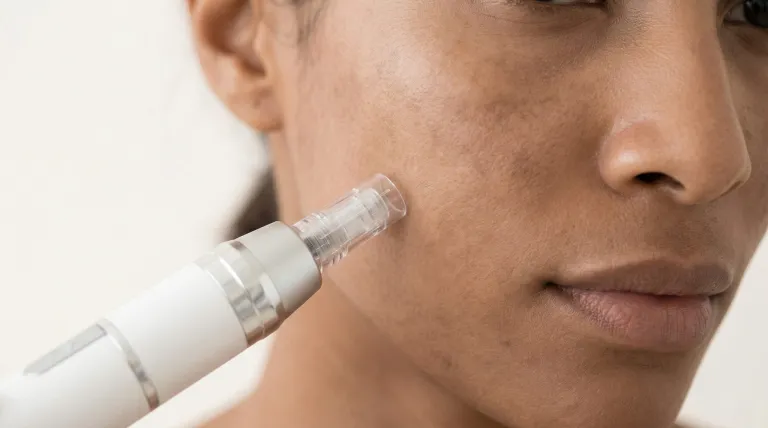
The short answer is yes — microneedling can meaningfully improve hyperpigmentation. But the longer answer matters more, because “hyperpigmentation” is a broad category, and how well microneedling works depends entirely on what type you have, what caused it, and what skin type you’re working with. Some forms respond well to microneedling alone. Others require combination therapy. And in certain cases, microneedling can temporarily make pigmentation worse before it gets better — which is something you should know before starting treatment.
Why Hyperpigmentation Is Not One Problem
Hyperpigmentation refers to any area of skin that’s darker than the surrounding tissue, but the mechanism behind it varies significantly depending on the cause. Understanding which type you’re dealing with affects both the treatment approach and the expected outcome.
Post-inflammatory hyperpigmentation (PIH) is the dark discoloration left behind after skin inflammation or injury — acne, eczema flares, cuts, or burns. The inflammation triggers excess melanin production, which deposits in the skin as the injury heals. PIH is especially common in darker skin tones (Fitzpatrick types III–VI), where melanocytes are more reactive to inflammation. This is one of the types most responsive to microneedling treatment.
Sun damage and solar lentigines — the brown spots, freckles, and diffuse discoloration caused by cumulative UV exposure — result from localized overproduction of melanin in response to ultraviolet radiation. These pigmented cells are concentrated in the epidermis and upper dermis. Microneedling can help improve sun damage by accelerating cell turnover and allowing depigmenting agents to penetrate more effectively, though it’s typically not the fastest standalone treatment for isolated sunspots.
Melasma is a hormonally driven form of hyperpigmentation that presents as symmetric patches, usually on the cheeks, forehead, upper lip, and chin. It’s notoriously difficult to treat because the pigmentation often extends into the deeper dermal layer and is prone to recurrence. Melasma treatment with microneedling can produce improvement, but managing expectations is critical — melasma is chronic and multifactorial, and no single treatment eliminates it permanently. We cover this in more detail in our post on microneedling for melasma.
Periorbital hyperpigmentation — dark circles under the eyes — is often genetically based, though it can be worsened by allergies, sleep deprivation, and thin under-eye skin. Research suggests microneedling combined with topical depigmenting agents can improve this type of discoloration, though results are more modest than with other forms of hyperpigmentation.
How Microneedling Addresses Pigmentation
Microneedling doesn’t bleach the skin or selectively destroy pigmented cells the way some laser treatments do. Instead, it improves hyperpigmentation through several indirect but clinically meaningful mechanisms.
Accelerated cell turnover. The controlled micro-injuries created by professional microneedling trigger the skin’s wound-healing response, which speeds up the production and migration of new skin cells. As fresh, normally pigmented cells form and rise to the surface, they gradually replace the older cells carrying excess melanin. This is the same natural process your skin uses to shed pigmented cells on its own — microneedling accelerates it.
Collagen remodeling in the dermis. For deeper pigmentation — particularly PIH associated with acne scarring — the collagen remodeling triggered by microneedling can help restructure the tissue where melanin has deposited. This is one of the reasons microneedling often improves both the textural scarring and the associated dark marks simultaneously.
Combining microneedling with topical products. Increased permeability is not proof of safe or effective drug delivery. Device clearance and combination treatments: The FDA has not cleared microneedling devices for use with PRP or another product. Clearance of a device for its labeled indication does not establish the safety or effectiveness of that combination. Discuss the exact device, proposed use, alternatives, and risks with the treating clinician.
What to Expect: Sessions, Timeline, and Degree of Improvement
Most patients see initial improvement in skin brightness and tone within a few weeks of their first session. Visible fading of dark spots typically becomes apparent over three to six months of treatment. This isn’t a slow treatment by pigmentation standards — it’s that melanin deposits take time to clear as the skin turns over.
Number of sessions. For most hyperpigmentation concerns, three to six sessions spaced four to six weeks apart represent a standard treatment plan. PIH from acne tends to respond faster (sometimes noticeable improvement in two to three sessions), while melasma and deep sun damage may require the full series plus ongoing maintenance. At ELLEMES, microneedling starts at $350 per session.
Maintenance. Hyperpigmentation is not a “treat and forget” concern. UV exposure, hormonal fluctuations, and ongoing inflammation can all trigger new melanin production. Most patients benefit from maintenance sessions every six to twelve months, combined with consistent daily sunscreen use and a medical-grade skincare regimen. We often recommend products from our SkinBetter Science or Revision Skincare lines for at-home pigmentation management between sessions.
The Skin Tone Consideration: When Microneedling Can Make Pigmentation Worse
Suitability depends on the exact device, indication, skin tone, and medical history. The FDA identifies pigment changes as a microneedling risk; a treatment should not be described as safe for every skin type or patient.
In patients with darker skin tones (Fitzpatrick types IV–VI), the inflammation created by microneedling itself can trigger a temporary worsening of hyperpigmentation — essentially creating new post-inflammatory hyperpigmentation from the treatment meant to address it. This is usually transient and resolves over several weeks, but it can be alarming if you’re not expecting it, and in some cases it can persist.
The risk is manageable with proper technique: conservative needle depths, appropriate spacing between sessions, strict post-treatment sun protection, and sometimes pre-treatment with topical agents to suppress melanocyte reactivity before beginning the microneedling series. This is where provider experience with melanin-rich skin matters significantly. We discuss treatment considerations for darker skin tones in our post on microneedling for darker skin tones.
For darker skin tones, compare the risks and evidence for the specific device and indication. Neither a mechanical mechanism nor avoidance of a laser establishes that microneedling is automatically the better option.
How Microneedling Compares to Other Hyperpigmentation Treatments
Microneedling vs. chemical peels. Chemical peels — including the VI Peel — work by removing the outer layers of skin to accelerate the shedding of pigmented cells. They can be very effective for superficial pigmentation and are sometimes combined with microneedling in a treatment plan. Peels tend to produce faster initial results for surface-level discoloration, while microneedling is better suited for pigmentation that involves deeper tissue changes or is accompanied by textural concerns like scarring.
Microneedling versus IPL and laser treatments. These procedures work differently, but safety comparisons depend on the actual device, settings, indication, and patient. Microneedling does not eliminate pigment risk across the full range of skin tones.
Microneedling versus topical treatments alone. A clinician should select treatment for the diagnosed cause of pigmentation. Do not assume that every brightening product is suitable for recently needled skin or that combining treatments always works better.
What Microneedling Won’t Do for Hyperpigmentation
It won’t produce overnight results. The biological processes involved — cell turnover, collagen remodeling, gradual replacement of pigmented cells — take weeks to months. If someone promises you dramatic pigmentation clearing after a single session, that should raise concerns.
It won’t permanently cure melasma. Microneedling can significantly improve melasma, but the underlying hormonal and genetic factors that drive melanin overproduction remain. Melasma management is ongoing, and recurrence is common, particularly with sun exposure or hormonal changes.
It won’t replace sunscreen. No amount of microneedling can counteract continued UV damage. Daily broad-spectrum SPF 30 or higher is non-negotiable during and after any pigmentation treatment series — and frankly, for the rest of your life if hyperpigmentation is a recurring concern for you. This is especially true in Atlanta, where significant UV exposure is a factor from March through October.
It won’t work as well without a complete treatment plan. Microneedling in isolation will produce some improvement, but the best results come from combining it with appropriate topical agents, sun protection, and sometimes complementary treatments like peels. A one-dimensional approach to hyperpigmentation rarely produces the results patients are hoping for.
RF Microneedling vs. Standard Microneedling for Pigmentation
RF microneedling adds radiofrequency energy to the standard microneedling procedure, which heats the deeper dermal tissue and enhances collagen remodeling. For hyperpigmentation specifically, standard microneedling is often the more appropriate starting point — the primary benefit of RF microneedling is tightening and deeper structural improvement, which is more relevant for fine lines, laxity, and deep scarring than for surface pigmentation.
That said, patients who have both hyperpigmentation and textural or laxity concerns — which is common in patients with acne scarring and associated PIH — may benefit from Vivace RF microneedling as part of a broader treatment plan. Your provider can help determine which approach makes the most sense for your specific combination of concerns.
Who Should and Shouldn’t Consider Microneedling for Pigmentation
Potential candidates need assessment of the cause of discoloration, skin tone, device indication, and history of pigment changes or abnormal scarring. A good sunscreen routine does not by itself establish suitability or guarantee minimal downtime.
Patients who should discuss their situation carefully with a provider include those with active acne or other inflammatory skin conditions (microneedling over active breakouts can worsen both the acne and the subsequent PIH), patients with a history of keloid or hypertrophic scarring, anyone currently using isotretinoin (Accutane), and pregnant or breastfeeding patients. We cover the full list of contraindications in our post on microneedling side effects and aftercare.
Learn more about microneedling at ELLEMES Medical Spa →
Book a complimentary consultation →
ELLEMES Medical Spa is located at 5505 Peachtree Dunwoody Road in Sandy Springs, GA — serving patients from Buckhead, Brookhaven, Dunwoody, and greater Atlanta.